
Quick Summary
A perfume wardrobe is a small, curated collection of fragrances chosen for the moments you actually live in, like a clothing wardrobe with scents for daytime, evenings, seasons, and moods. Build it by reviewing what you already own, testing scents on your skin, and buying full bottles in stages.
- Test scents on your skin and check them at one and four hours before buying.
- Never buy a full bottle until a sample has earned at least two weeks of real wear.
- Aim for one scent each for everyday daytime, evening, work, and seasonal wear.
- Store perfume away from light, heat, and bathroom humidity to preserve it longer.
- Start with a discovery set to test several scents before committing to a full bottle.
Table of Contents
- What a Perfume Wardrobe Is and Why It Beats Buying Blind
- Step 1: Review the Perfumes You Already Own
- Step 2: Find Your Signature Scent by Fragrance Family
- Step 3: Test Scents on Your Skin Before Committing
- Step 4: Fill Your Wardrobe With Perfumes for Different Occasions
- Step 5: Set a Budget and Build in Stages
- Step 6: Store and Organize Your Collection
- Start Your Wardrobe With a Discovery Set
- Frequently Asked Questions
What a Perfume Wardrobe Is and Why It Beats Buying Blind
Last Updated: November 4, 2026
Buying perfume online can feel like a gamble. The bottle looks lovely, the description sounds right, and then the scent turns out to be something you never wear. A perfume wardrobe fixes that problem. It is a small, curated collection of fragrances chosen for the moments you actually live in, not a shelf of impulse buys. At Fragrance Galore, we think the best collections are built on purpose, one scent at a time.
Think of it like a clothing wardrobe. You do not own forty identical black sweaters. You own a few pieces that work for work, weekends, and nights out. A perfume wardrobe works the same way, with fragrances for daytime, evenings, seasons, and moods.
Here is why it beats buying blind:
- Less waste. You stop buying bottles you wear twice.
- Better gifts. You learn which families you and the people close to you prefer.
- More variety. Each scent covers a different job, so you do not default to one bottle every day.
Watch out: Do not buy a full bottle based on one spritz on a paper strip. Scents change as they dry on your skin, so test before you commit.
Step 1: Review the Perfumes You Already Own
Start with what you have. Pull out every bottle and sample, including the ones tucked in a drawer. Note which ones you reach for, which ones sit untouched, and why.
Ask yourself a few simple questions:
- Which scents do people compliment?
- Which ones do you wear on good days versus bad days?
- Which bottles are nearly empty, and which have barely been opened?
Write the answers down. Patterns show up fast. Many people discover they love fresh, citrus-led scents but keep buying heavy, sweet ones. That gap is useful information.
Step 2: Find Your Signature Scent by Fragrance Family
Fragrances are grouped into families based on their dominant character. The main families include floral, fresh (citrus and aquatic), woody, oriental (warm, spicy, and resinous), and gourmand (sweet and edible-smelling). Knowing your family makes shopping far easier.
To narrow yours down, look at the notes. Top notes hit first and fade quickly. Heart notes form the body of the scent. Base notes, such as vanilla, oud, or sandalwood, linger longest. A scent you love in the base notes will stay with you all day.
If you want more help exploring families, read our guide on floral perfume alternatives to popular designer scents. For a deeper look at picking one scent to represent you, see how to find your signature scent: a complete guide.
Step 3: Test Scents on Your Skin Before Committing
Paper strips cannot tell you how a fragrance will behave on you. Your skin chemistry, body temperature, and even diet change how a scent develops.
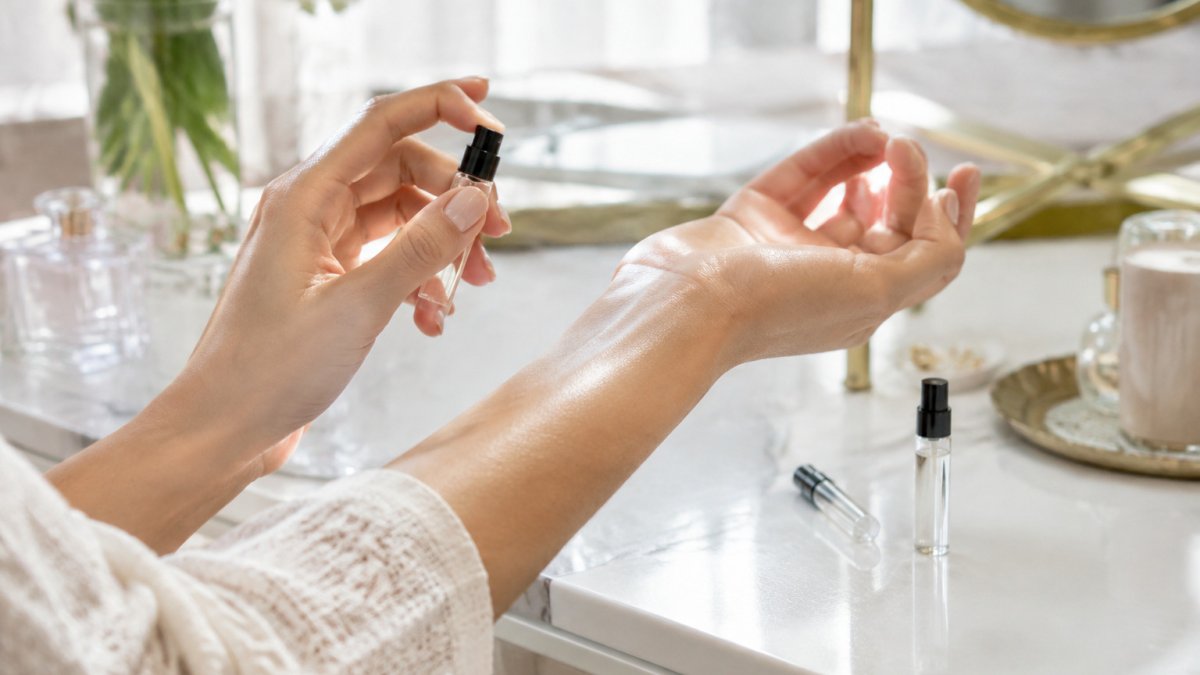
Follow this simple testing process:
- Spray one scent on the inside of your wrist or elbow.
- Wait 10 minutes and smell it again.
- Check it at one hour and again at four hours.
- Note how it feels at the end of the day.
Give each scent a full day before you decide. Test only two or three scents at once, or your nose will tire out. A fragrance sample kit with five fractional specimens lets you test several bottles on your own skin without buying full sizes.

Step 4: Fill Your Wardrobe With Perfumes for Different Occasions
A balanced wardrobe covers the moments you move through each week. Aim for one scent in each of these roles:
- Everyday daytime: light, fresh, and easy to wear around others.
- Evening or date night: richer, warmer, or more sensual.
- Work or professional settings: clean and subtle, never overpowering.
- Seasonal picks: brighter scents for warm months, deeper ones for cold months.
Small wardrobes can cover many occasions with the right mix. A four-piece women's perfume set in a gift box offers a range of fragrances for different moods and events.

Step 5: Set a Budget and Build in Stages
A perfume wardrobe is a series of purchases, not a single haul. The fastest way to overspend is to buy full bottles before you know what you wear. The fastest way to under-buy is to sample forever and never commit. A staged budget solves both problems.
Start by deciding what one new fragrance per month or per quarter is worth to you, then hold that number.
Fragrance Discovery Set – 5 Artisan Scents | Sample & Find Your Signature →
Know what each format actually costs you
The practical rule: never buy a full bottle until a sample or travel spray has earned at least two weeks of real wear. That single rule prevents most of the waste a perfume wardrobe is meant to eliminate.
A three-stage plan with target spend
| Stage | What to Buy | Typical Spend | Goal |
|---|---|---|---|
| Stage 1 (months 1-2) | Two discovery sets or a curated sample bundle | $40-$90 total | Test 8-12 scents across families and roles |
| Stage 2 (months 3-5) | One or two full bottles for your most-used roles | $80-$200 per bottle | Lock in an everyday scent and one evening scent |
| Stage 3 (ongoing) | One new bottle or travel spray per season | $25-$150 per addition | Fill seasonal and occasion gaps without crowding the shelf |
Treat those ranges as planning anchors, not promises. The point is the ratio: spend early money on breadth, late money on depth.
Where to save and where to spend
Watch out: Do not let a sale or a gift-with-purchase set your pace. A discounted bottle you did not plan for is still a bottle you may never wear, and it competes for shelf space with the scents that actually fit your wardrobe.
A discovery set is a practical first purchase. It lets you test several scents across different families before you commit to a full-size bottle.
Step 6: Store and Organize Your Collection
Storage and organization affect how long a fragrance stays true to its original scent, and whether you actually reach for the right bottle.
What actually degrades a fragrance
Four factors do the damage, in roughly this order:
- Light: ultraviolet light breaks down fragrance molecules and can turn a clear scent cloudy or sour. A closed drawer or an opaque box beats a pretty shelf in direct sun.
- Heat: sustained warmth accelerates chemical breakdown. A closet that stays near room temperature is fine; a windowsill, a car, or a shelf above a radiator is not.
- Humidity and temperature swings: bathrooms combine steam, heat, and moisture, which is why they are the worst common storage spot. A bedroom drawer or closet is a better default.
- Air: every spray lets oxygen in. Keep caps tight, avoid leaving bottles open, and do not decant into poorly sealed containers for long-term storage.
Realistic shelf life
Shelf life depends on concentration and formula, but common expectations are:
- Citrus-forward and fresh scents: often best within two to three years. Their top notes fade first.
- Florals and light woods: commonly three to five years.
- Resinous, oud, vanilla, and amber-heavy scents: often five years or more, and some improve slightly with age.
Unopened bottles generally last longer than opened ones, but "unopened" is not a guarantee. Store everything as if it were open.
Signs a fragrance has turned
Check older bottles against this list before you wear them for an occasion:
- The liquid has darkened noticeably or turned cloudy.
- The opening smells sharp, sour, or like rubbing alcohol instead of the original top notes.
- The scent fades within minutes instead of developing through its heart and base.
- The color or texture has separated or left sediment.
A scent that has changed will not represent the fragrance you bought, so it is best retired rather than forced into rotation.
Organize by role, not by bottle shape
A wardrobe you cannot navigate becomes a wardrobe you ignore. Group bottles by the job they do:
- Everyday and work scents together, front and center.
- Evening and occasion scents in a second group.
- Seasonal picks stored separately and rotated in when the weather shifts.
- Samples and travel sprays in a single bin so they do not scatter.
A simple label on each group, or a small tray per role, is enough. The goal is to make the right scent the easy reach.
Rotate, use up, and edit
A perfume wardrobe is not static. Twice a year, pull everything out and ask three questions:
- Did I wear this in the last six months?
- Does it still fit the roles I actually need?
- Has it changed in color or smell?
Anything that fails all three is a candidate to declutter, gift, or finish off as a room or linen spray if the scent is still pleasant. Rotating seasonal scents to the front of the drawer keeps them in use and keeps the collection honest.
Watch out: Avoid storing fragrance in the bathroom, where steam and temperature swings can degrade a scent.
Start Your Wardrobe With a Discovery Set
The easiest first step is a discovery set. Sampling five scents across several days shows you which ones earn a place in your wardrobe. Our Fragrance Discovery Set includes five artisan fragrances in small vials, plus a credit toward a full bottle. Try a few, track how each one develops, and build your collection from what you truly love.

Frequently Asked Questions
How many perfumes should be in a fragrance wardrobe?
Most people do well with a small core rather than a large shelf. A practical starting point is three to five full-size bottles: one signature scent, one everyday option for work or errands, one for evenings or dates, and one seasonal pick. Add more only when you find a gap you actually feel when you reach for a bottle. Quality and fit matter more than count, and a smaller collection you rotate through is easier to maintain and enjoy.
What is a perfume wardrobe?
A perfume wardrobe is a curated set of fragrances chosen to cover your personal taste, daily routine, seasons, and special occasions. Instead of owning many random bottles, you build a rotation where each scent has a clear role. Fragrance families such as floral, citrus, woody, and oriental help you see which scents overlap and which add variety, so every purchase earns its place.
How do I choose perfumes for different occasions?
Start with the setting and energy you want. Fresh citrus and light aquatic scents usually suit daytime and warm weather. Richer woody, oriental, or vanilla-based scents often work better for evenings and cooler months. Test each candidate for a full day, since top notes fade and the heart and base notes show your real experience. Keep one versatile scent that works in most settings so your wardrobe never feels limited.
Can I layer fragrances from my perfume wardrobe?
Yes, layering is a practical way to get more from a small collection. Apply a lighter scent first, such as a citrus or fresh fragrance, then add a warmer one to the same pulse points once the first has settled. Keep combinations simple at first, and avoid stacking two heavy orientals, which can become overpowering. Test any new pairing on your skin before wearing it out.


